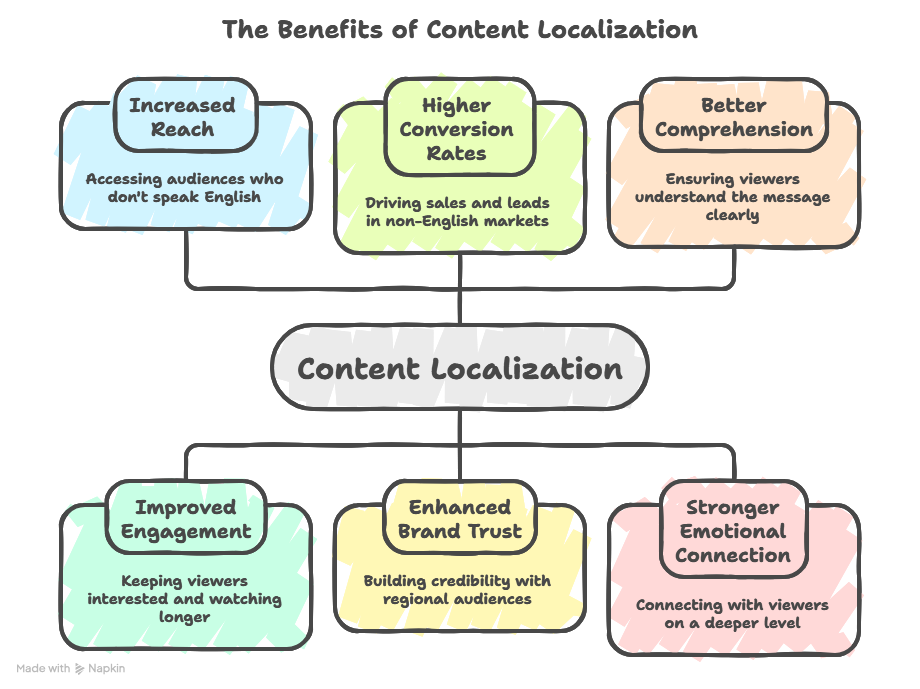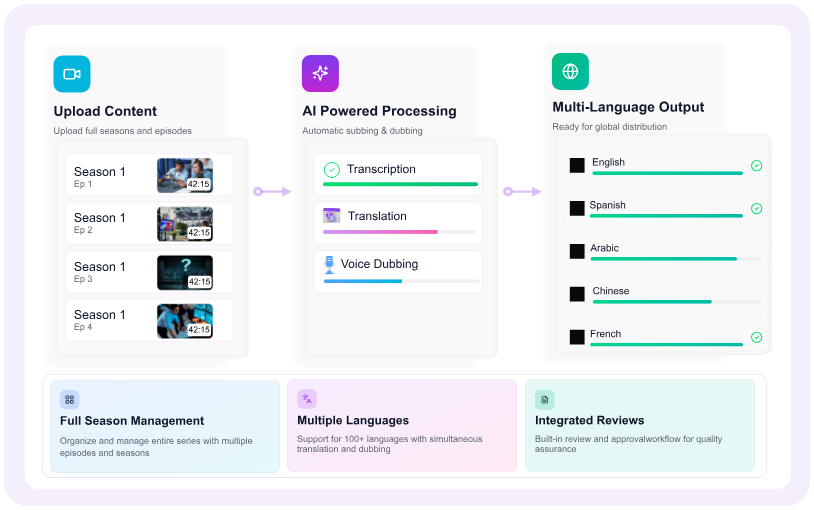
Publishing content online means reaching audiences across countries, cultures, and languages. Yet many companies still produce videos, courses, and media content in a single language, limiting their ability to scale globally. This raises an important strategic question: how many languages should you actually localize your content into? The answer depends on multiple factors such as audience distribution, market potential, platform growth strategy, and production capacity. For organizations producing multilingual content, the goal is not simply translating everything into as many languages as possible. The real objective is making informed language selection decisions that maximize reach while maintaining operational efficiency. At the same time, a more fundamental question needs to be addressed first: how much multilingual content do you actually need? This guide explores both sides of the problem. It explains the benefits and rewards of multilingual content, how to determine the right number of languages, and how platforms like Echo9 make large-scale localization operationally feasible. Why You Should Localize Content into Multiple Languages The internet is global, but language remains the biggest barrier to access. Even though English dominates online content, the majority of internet users are non-native English speakers. Studies consistently show that over 75% of users prefer consuming content in their native language, even when they understand English. This creates a clear gap between content availability and audience preference. Localizing content into multiple languages addresses this gap directly. It allows organizations to: When content is presented in a viewer’s native language, comprehension improves. Emotional connection also becomes stronger. This is particularly important for video content where tone, delivery, and nuance play a critical role. In practical terms, language determines whether your content is accessible or invisible. The Real Benefits of Multilingual Content Localization is often treated as a technical step in production. In reality, it is a growth strategy. Expanding into multiple languages creates measurable advantages across distribution, engagement, and monetization. 1. Audience Expansion Without New Content Creation Producing new content is expensive and time-consuming. Localization allows companies to extract more value from existing content. A single video can reach entirely new audiences simply by adding subtitles or dubbing in additional languages. This multiplies the impact of every piece of content already created. 2. Higher Engagement and Retention Viewers are more likely to watch content fully when it is in their native language. Localized content improves: This directly impacts platform algorithms, which prioritize content with stronger engagement signals. 3. Improved Monetization Opportunities Different markets have different revenue dynamics. By expanding language coverage, companies can access: For example, Spanish and Portuguese localization alone can unlock access to hundreds of millions of viewers across Latin America. 4. Competitive Advantage in Global Markets Many companies delay localization due to cost or complexity. Early adopters gain a clear advantage. Localized content allows businesses to: In global content distribution, timing matters. Localization accelerates market entry. 5. Stronger Brand Trust and Cultural Relevance Language is closely tied to culture. When content reflects a viewer’s language, it feels more relevant and credible. This is particularly important for: Localization helps brands communicate more effectively across regions without losing meaning. Before deciding on multilingual content you should clear your understanding about localization. Read here: What is media localization? Why Not Localize into Every Language? If localization offers so many benefits, why not translate content into every possible language? The answer lies in operational constraints and diminishing returns. Localization involves cost, coordination, and quality management. Expanding into too many languages too quickly can result in: This is why language expansion must be strategic. The goal is not maximum language coverage. The goal is maximum impact per language. How Many Languages Should You Start With And How To Determine Them? Most organizations begin with a focused set of 5 to 8 languages. This range allows companies to: A typical starting set includes: These languages collectively represent a large share of global internet users and provide strong coverage across key regions. As performance data becomes available, additional languages can be added in phases. Step 1: Use Audience Data for Language Selection Effective language selection begins with understanding where your audience already exists. Most platforms provide analytics showing geographic distribution of viewers. These insights often reveal immediate opportunities. For example: If significant traffic comes from non-English regions, localization should prioritize those languages first. This ensures that multilingual content aligns with actual demand. Step 2: Align Language Selection with Revenue Goals Audience size alone is not enough. Businesses must also consider market value. Different regions offer different monetization potential. For example: A training platform may prioritize European languages, while an entertainment platform may focus on high-population regions. Balancing reach and revenue leads to a more sustainable localization strategy. Step 3: Match Language Strategy to Content Type The number of languages you should localize into depends heavily on the type of content you produce. Educational Content: Courses benefit from wide distribution. Localization into 10 to 20 languages can significantly increase accessibility and long-term value. Entertainment and Series Content: Episodic content requires consistency across episodes. Voice continuity and terminology alignment become critical. This increases the importance of structured workflows. Marketing and Corporate Content: These typically focus on specific regions where business operations exist. Localization is more targeted rather than global. Understanding content type helps define how aggressively multilingual content should expand. The Hidden Challenge of Scaling Multilingual Content As the number of languages increases, complexity grows rapidly. Common challenges include: These issues are especially visible in series-based content. For example, if a character’s voice or name changes between episodes in different languages, it disrupts the viewing experience. Maintaining consistency across languages is one of the biggest challenges in large-scale localization. How Echo9 Enables Scalable Multilingual Content Modern AI-based platforms reduce the operational burden of localization. Echo9 is built to support organizations managing multilingual content at scale. The platform allows teams to: Instead of treating each video as a separate task, Echo9 introduces a structured system that supports continuous localization. This makes it possible to expand into multiple languages without significantly increasing production time.