
Loading...
Echo9's emotion-based localization engine, part of the same AI dubbing platform, tags emotional intent at the line level, so a mother's silence and a father's suppressed pride carry through distinctly, in every language.
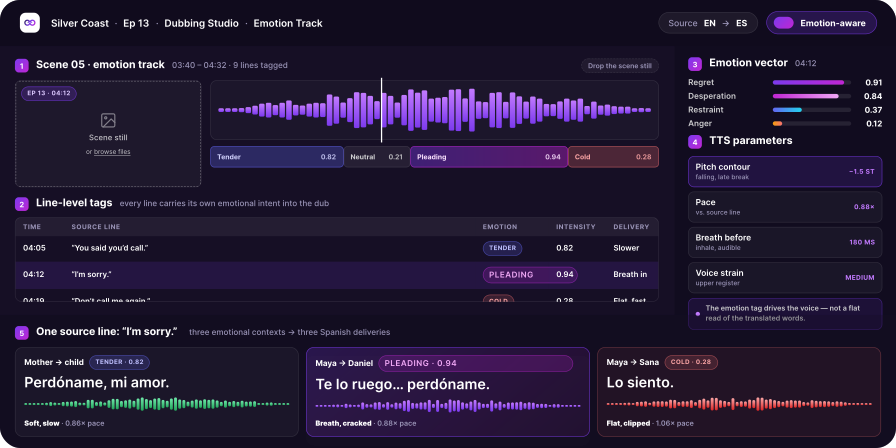
The numbers behind keeping twelve deliveries of one line from sounding the same.
Where Standard Tools Fall Short
The same line, said twelve different ways across one episode, needs twelve different emotional deliveries in the dub. See how that gap plays out against a specific competitor in our Echo9 vs. Descript comparison.
Standard AI Dubbing Tools
Echo9
Emotion-based localization isn't one delivery style — it's a per-line pipeline. Here's what's actually running.
Every line gets an editable emotion tag your team can see and adjust directly, not a hidden black-box setting.
Each tagged line gets its own vocal parameters, set per line rather than per character or per episode.
If one line's emotional read is off, only that line gets reprocessed — not the whole scene.
Emotional pacing set by score and ambient sound stays on its own audio layer, so it isn't flattened when dialogue is remixed.
Benchmarked against a large manually tagged drama dataset, not a generic sentiment classifier.
Every line is auto-tagged, and any tag can be corrected by a human reviewer with one click.
SOURCE LINE
“I'm fine.”
— said with suppressed grief
STANDARD (ONE DEFAULT TONE)
Flat, default delivery
ECHO9 (EMOTION-TAGGED)
Tagged [suppressed grief] → quieter pace, lower pitch
SOURCE LINE
“Get out.”
— said in cold, controlled fury
STANDARD (ONE DEFAULT TONE)
Often defaults to a shouted delivery
ECHO9 (EMOTION-TAGGED)
Tagged [cold anger] → quiet and clipped, not shouted
This is the same feeling-preservation work covered in AI vs. Human Dubbing Is the Wrong Question — here's the short version for this one feature.
A simple bracket syntax your team can review and edit directly.
Speed, pitch, and volume set per line, not per episode.
A second pass on one line's emotional read, without redoing the scene.
So emotional pacing isn't lost to a flattened audio mix.