
Loading...
Localization project management built for people who own the deadline on every video localization project — episode status, language pipelines, and a dashboard that reflects reality.
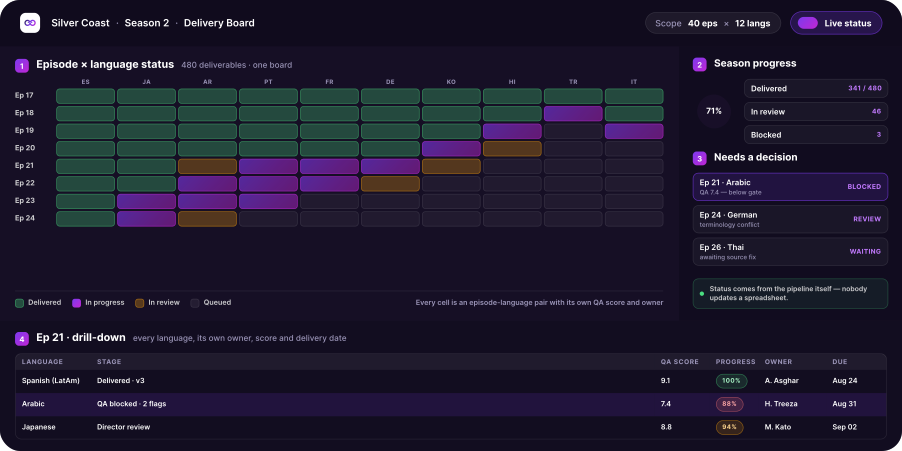
The numbers behind tracking delivery without three separate tools.
Where Manual Process Falls Short
A spreadsheet, a chat thread, and someone's memory — that's how most teams track delivery today. See how that gap plays out against a specific competitor in our Echo9 vs. OOONA comparison.
Spreadsheets & Chat Threads
Echo9
Project tracking isn't a status field someone updates — it reflects the pipeline directly. Here's what's actually running.
Every episode's status is tracked through all eight pipeline stages, not a single “in progress” flag.
Each target language for an episode is tracked as its own pipeline, so one delayed language doesn't obscure the rest.
The dashboard shows where an episode is stuck, not just that something happened recently.
Adding a new episode to a project automatically inherits the same target languages and settings.
Status tracking reflects the actual delivery pipeline that powers the work, not a separate layer someone updates by hand.
A production lead can see status across every active project from one view, not project by project.
CAPABILITY
Update method
SPREADSHEETS & CHAT
Manual, goes stale immediately
ECHO9
Automatic, reflects the pipeline live
CAPABILITY
Visibility
SPREADSHEETS & CHAT
Whoever last updated the sheet
ECHO9
Whole team, real time
If your team is still tracking this in a spreadsheet, The 4–6 Hour Episode Pipeline walks through what stage-by-stage tracking looks like on a real production pipeline.
Upload, localization, dubbing, review, QA, final output.
One delayed language doesn't obscure the rest.
See where an episode is stuck, not just that it's late.
The same eight-stage process that powers delivery, not a bolted-on tracker.