
Loading...
No other AI dubbing platform on the market does this. Echo9's QA Engine runs an AI director's review pass on every delivery, automatically, before a client ever sees a flagged issue.
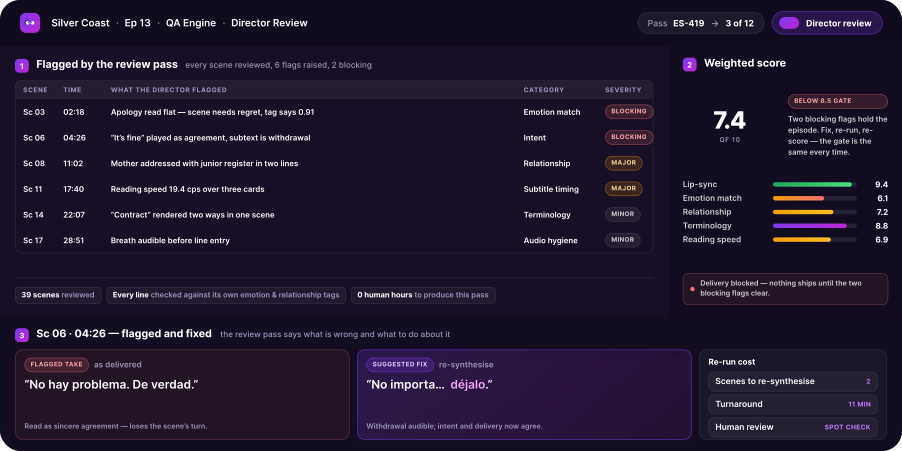
The numbers behind catching issues before a client does.
Where Standard Tools Fall Short
Most platforms offer no post-dubbing QA at all — the client watches and reports problems. See how that gap plays out against a specific competitor in our Echo9 vs. VEED comparison.
Standard AI Dubbing Tools
Echo9
The QA Engine isn't a single pass/fail check — it's several checks running together. Here's what's actually running.
The QA Engine watches the source and dubbed video side by side, not the dub in isolation.
Flags scenes where mouth movement and audio drift out of sync, timestamped to the exact line.
The same character's voice is checked against its own history to catch drift across a long-running series.
Lines present in the source but dropped in the dub are caught automatically before delivery.
Every flagged issue comes with a timestamp, category, and a suggested fix — handed to your editors, not hidden in a black-box score.
The whole pass runs automatically in about 30 minutes per episode, before a client or platform ever sees the file.
ISSUE TYPE
Lip-sync drift
TIMESTAMP
00:14:32
SUGGESTED FIX
Re-render segment with reduced timing offset
ISSUE TYPE
Missing dialogue
TIMESTAMP
00:22:10
SUGGESTED FIX
Restore dropped line from source track
We built a companion resource for teams who want to run this discipline manually too — The QA Engine Checklist.
Not after a client catches them.
Including drift across long-running series.
Between the source performance and the dub.
Surfaced in a structured, PDF-style report.