6 Effective Types of Video Localization for Global Growth
Video has become the world’s dominant digital habit. With 164.6 million live video viewers in 2024 in only US, the demand is exploding across LATAM, MENA, and Southeast Asia. For creators and studios, the message is clear: to scale, you must speak the audience’s language. Localization is no longer optional – it is a direct driver of ROI. It is evident that most consumers prefer content in their native tongue, even if it’s poor quality, because familiarity builds trust. But with so many options available, which types of video localization actually move the needle for your brand? This guide breaks down the essential types of video localization, comparing traditional dubbing with modern AI workflows. You’ll learn how to choose the right model for your strategy and how platforms like Echo9 make global expansion faster and more scalable than ever. What Is Video Localization? Video localization adapts content for global audiences as it goes beyond simple translation. Language is adjusted for regional relevance and cultural nuances are carefully considered. Messaging is aligned with local expectations and audio and subtitles are modified when needed. The goal is clarity and connection. Content should feel as if it was created for the audience rather than translated for them. When localization is done well, viewers engage naturally with the story, message, or learning material without feeling the barrier of language. Video localization ensures content resonates across languages and regions. It goes beyond translation. It includes linguistic accuracy, cultural context, timing, tone, and technical synchronization. Effective localization ensures: Beyond language, localization also considers how audiences consume content. Reading speed, subtitle length, and speech pacing may vary between regions. These adjustments help maintain viewer comfort and comprehension while preserving the original intent of the content. There are several video localization types, each suited for different use cases. Types of Video Localization Video localization is far more than just translating words; it’s about adapting the entire viewing experience to resonate with a specific culture. Depending on your budget, target audience, and the type of content (e.g., a corporate training video vs. a blockbuster movie), you’ll usually land on one or a combination of these methods. 1. Subtitling Subtitling is the most widely used localization method. It involves displaying translated text on screen while keeping the original audio intact. This allows viewers to understand the dialogue while still hearing the original voices, tone, and emotional delivery of the speakers. Subtitles provide a practical way to make content accessible to global audiences without altering the original production. By translating dialogue into multiple languages, creators can expand reach while maintaining the integrity of the original audio track. When Subtitling Works Best Instead of replacing the original audio, subtitles translate spoken dialogue into text that appears on the screen. This allows the original voices, tone, and performance of the speakers to remain intact while making the content understandable to viewers who speak different languages. Because subtitling does not require voice recording or audio replacement, it is typically faster and more cost-effective than dubbing. It also works well for content where the authenticity of the original speaker’s voice is important, such as interviews, speeches, or documentary storytelling. Subtitling works best for content such as: Subtitling is cost-effective and faster than dubbing. However, it requires viewers to read while watching, which can reduce emotional immersion. Challenges While subtitling is efficient and widely used, it also introduces several technical and linguistic constraints. Unlike dubbing, where dialogue can be adapted more freely through voice performance, subtitles must fit within strict visual and timing limits on screen. Translators must balance accuracy, readability, and synchronization with the original speech. Because viewers read subtitles while watching the visuals, text must remain concise and easy to process. This means sentences often need to be shortened without losing meaning. At the same time, subtitles must appear and disappear at the correct moment so that the viewer can comfortably follow the dialogue. Common challenges include: AI-powered subtitling tools now automate transcription, translation, and timing. Platforms like Echo9 support subtitles in over 100 languages. AI generates subtitles quickly and accurately. Multiple languages can be processed at once. Editors can refine phrasing directly within the platform. There is no need to export scattered files. All revisions happen inside a centralized workflow. Version control remains structured and traceable. Subtitle localization becomes faster and more scalable. For series or episodic content, consistency is critical. Character names must remain unchanged. Terminology should stay aligned across episodes. Fragmented workflows often create inconsistencies. Echo9’s Series Management solves this issue. Standards are defined once and reused. Voice and terminology stay consistent. Rework and corrections are significantly reduced. 2. Voice-Over Voice-over replaces the original dialogue with translated narration. The new narration becomes the primary audio. The original dialogue is not fully removed. Background audio remains at a lower volume. Ambient sound and music stay intact. This method preserves the original atmosphere. Voice-over is common in documentaries and interviews. It offers faster and more affordable localization. Unlike dubbing, it does not attempt lip synchronization. Common Use Cases Voice-over is another widely used method in video localization, particularly for informational and educational content. In this approach, the translated narration is recorded and layered over the original audio track, which is usually lowered in volume but still faintly audible in the background. This allows the audience to hear the translated explanation while maintaining some connection to the original speaker. Unlike full dubbing, voice-over does not attempt to match lip movements or recreate the exact performance of the original actor. Instead, the focus is on delivering clear and understandable narration in the target language. Because of this simpler production process, voice-over is often faster to produce and more cost-efficient. Voice-over is commonly used in content such as: Voice-over is faster and cheaper than full dubbing. It maintains clarity but sacrifices character immersion in narrative-driven content. Traditional voice-over requires studio recording and actor scheduling. AI voice-over reduces dependency on studios and shortens production cycles significantly. 3. Traditional Dubbing Traditional dubbing fully replaces the original dialogue.
Table of Contents
Video has become the world’s dominant digital habit. With 164.6 million live video viewers in 2024 in only US, the demand is exploding across LATAM, MENA, and Southeast Asia. For creators and studios, the message is clear: to scale, you must speak the audience’s language.
Localization is no longer optional – it is a direct driver of ROI. It is evident that most consumers prefer content in their native tongue, even if it’s poor quality, because familiarity builds trust. But with so many options available, which types of video localization actually move the needle for your brand?
This guide breaks down the essential types of video localization, comparing traditional dubbing with modern AI workflows. You’ll learn how to choose the right model for your strategy and how platforms like Echo9 make global expansion faster and more scalable than ever.
What Is Video Localization?
Video localization adapts content for global audiences as it goes beyond simple translation. Language is adjusted for regional relevance and cultural nuances are carefully considered. Messaging is aligned with local expectations and audio and subtitles are modified when needed.
The goal is clarity and connection. Content should feel as if it was created for the audience rather than translated for them. When localization is done well, viewers engage naturally with the story, message, or learning material without feeling the barrier of language.
Video localization ensures content resonates across languages and regions. It goes beyond translation. It includes linguistic accuracy, cultural context, timing, tone, and technical synchronization.
Effective localization ensures:
Dialogue feels natural in the target language
Cultural references make sense locally
Audio and subtitles match timing precisely
Brand tone remains consistent across markets
Beyond language, localization also considers how audiences consume content. Reading speed, subtitle length, and speech pacing may vary between regions. These adjustments help maintain viewer comfort and comprehension while preserving the original intent of the content.
There are several video localization types, each suited for different use cases.
Types of Video Localization
Video localization is far more than just translating words; it’s about adapting the entire viewing experience to resonate with a specific culture. Depending on your budget, target audience, and the type of content (e.g., a corporate training video vs. a blockbuster movie), you’ll usually land on one or a combination of these methods.
1. Subtitling
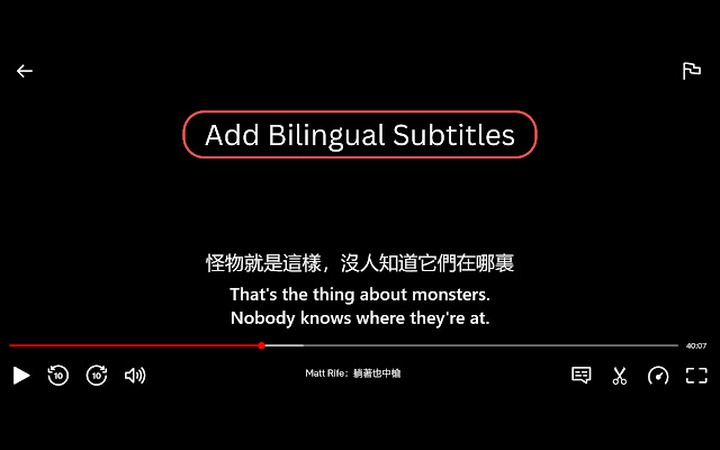
Subtitling is the most widely used localization method. It involves displaying translated text on screen while keeping the original audio intact. This allows viewers to understand the dialogue while still hearing the original voices, tone, and emotional delivery of the speakers.
Subtitles provide a practical way to make content accessible to global audiences without altering the original production. By translating dialogue into multiple languages, creators can expand reach while maintaining the integrity of the original audio track.
When Subtitling Works Best
Instead of replacing the original audio, subtitles translate spoken dialogue into text that appears on the screen. This allows the original voices, tone, and performance of the speakers to remain intact while making the content understandable to viewers who speak different languages.
Because subtitling does not require voice recording or audio replacement, it is typically faster and more cost-effective than dubbing. It also works well for content where the authenticity of the original speaker’s voice is important, such as interviews, speeches, or documentary storytelling.
Subtitling works best for content such as:
Documentaries
Interviews
News content
Budget-conscious projects
Audiences comfortable reading subtitles
Subtitling is cost-effective and faster than dubbing. However, it requires viewers to read while watching, which can reduce emotional immersion.
Challenges
While subtitling is efficient and widely used, it also introduces several technical and linguistic constraints. Unlike dubbing, where dialogue can be adapted more freely through voice performance, subtitles must fit within strict visual and timing limits on screen. Translators must balance accuracy, readability, and synchronization with the original speech.
Because viewers read subtitles while watching the visuals, text must remain concise and easy to process. This means sentences often need to be shortened without losing meaning. At the same time, subtitles must appear and disappear at the correct moment so that the viewer can comfortably follow the dialogue.
Common challenges include:
Limited character space per line
Reading speed constraints
Cultural idioms must be adapted carefully
Subtitle timing must match speech precisely
AI-powered subtitling tools now automate transcription, translation, and timing. Platforms like Echo9 support subtitles in over 100 languages. AI generates subtitles quickly and accurately.
Multiple languages can be processed at once. Editors can refine phrasing directly within the platform. There is no need to export scattered files. All revisions happen inside a centralized workflow. Version control remains structured and traceable. Subtitle localization becomes faster and more scalable.
For series or episodic content, consistency is critical. Character names must remain unchanged. Terminology should stay aligned across episodes. Fragmented workflows often create inconsistencies.
Echo9’s Series Management solves this issue. Standards are defined once and reused. Voice and terminology stay consistent. Rework and corrections are significantly reduced.
2. Voice-Over
Voice-over replaces the original dialogue with translated narration. The new narration becomes the primary audio. The original dialogue is not fully removed. Background audio remains at a lower volume. Ambient sound and music stay intact. This method preserves the original atmosphere.
Voice-over is common in documentaries and interviews. It offers faster and more affordable localization. Unlike dubbing, it does not attempt lip synchronization.
Common Use Cases
Voice-over is another widely used method in video localization, particularly for informational and educational content. In this approach, the translated narration is recorded and layered over the original audio track, which is usually lowered in volume but still faintly audible in the background. This allows the audience to hear the translated explanation while maintaining some connection to the original speaker.
Unlike full dubbing, voice-over does not attempt to match lip movements or recreate the exact performance of the original actor. Instead, the focus is on delivering clear and understandable narration in the target language. Because of this simpler production process, voice-over is often faster to produce and more cost-efficient.
Voice-over is commonly used in content such as:
Corporate training
E-learning modules
Explainer videos
News features
Documentary narration
Voice-over is faster and cheaper than full dubbing. It maintains clarity but sacrifices character immersion in narrative-driven content.
Traditional voice-over requires studio recording and actor scheduling. AI voice-over reduces dependency on studios and shortens production cycles significantly.
3. Traditional Dubbing
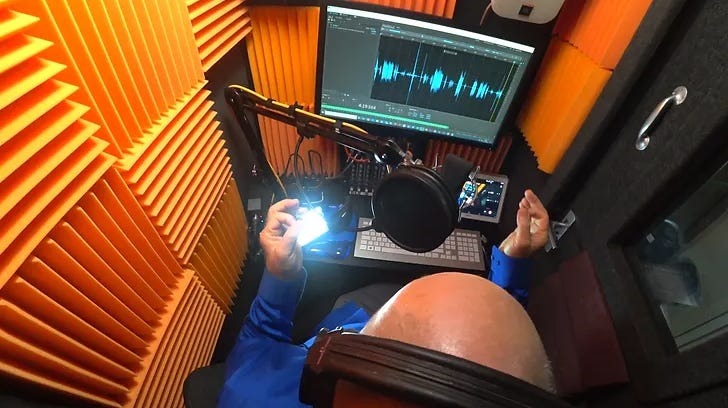
Traditional dubbing fully replaces the original dialogue. New voice performances are recorded in a studio. Professional actors recreate the lines in another language. Lip movements are carefully matched. Emotional tone is reproduced scene by scene. Timing and pacing are manually adjusted. This process requires multiple recording sessions.
Traditional dubbing focuses on precision and performance quality. This is the most immersive localization method and widely used for:
TV dramas
Animated films
Streaming series
Feature films
Traditional Dubbing Workflow
Traditional dubbing follows a structured production process that has been used in the media industry for decades. The goal is to replace the original spoken dialogue with a translated version while maintaining natural delivery, emotional tone, and synchronization with the visuals. Because the process involves multiple specialists and studio resources, it is typically organized into several production stages.
Each stage must be completed before the next begins, which makes the workflow sequential and resource-dependent. Translators, voice actors, recording engineers, and editors all contribute to the final output. Coordinating these roles requires scheduling studio sessions, managing revisions, and ensuring that the translated dialogue aligns correctly with the original scenes.
A typical traditional dubbing workflow includes:
Script translation and adaptation
Lip-sync script rewriting
Casting voice actors
Studio recording sessions
Audio mixing and mastering
Quality review
This process is time-consuming. Each episode may take weeks to complete. Studio bookings increase production time. Actor fees add significant cost. Multiple recording sessions extend timelines. Post-production work requires additional resources. Editing and synchronization take careful adjustment.
Overall expenses rise quickly with each language version.
Challenges
Producing dubbed content across multiple episodes or seasons introduces several operational challenges. As projects grow larger, coordinating the many people and resources involved in traditional dubbing becomes increasingly difficult. What works for a single episode or short project can become much more complicated when entire seasons or multiple language versions are involved.
Traditional dubbing workflows depend heavily on human coordination and studio availability. Translators, voice actors, recording engineers, and editors must align their schedules across different production stages. When content needs to be localized into several languages at the same time, these logistical requirements multiply quickly.
Common challenges include:
Scheduling conflicts
Budget limitations
Inconsistent voices across seasons
Difficulty scaling to multiple languages simultaneously
For series with 20 or more episodes, maintaining voice continuity becomes complex. Recasting can disrupt audience experience.
4. AI Dubbing
AI dubbing uses synthetic voices trained on natural speech patterns. Translated dialogue is generated automatically. Studio recording sessions are no longer required for every version. Production becomes faster and more scalable.
This is one of the fastest-growing video localization types. It reduces turnaround time significantly. Localization costs drop substantially.
AI dubbing makes multilingual expansion more efficient and accessible.
How AI Dubbing Works
AI dubbing relies on a combination of machine learning technologies that automate several stages of the traditional localization workflow. Instead of recording dialogue in a studio, AI systems process the original audio, generate translated scripts, and produce synthetic speech that matches the pacing of the video. This digital pipeline allows many of the steps that once required manual coordination to be handled automatically.
Because these processes run within software-driven workflows, multiple tasks can be executed quickly and often in parallel. The system analyzes the original dialogue, prepares translated versions, generates voice tracks, and aligns the audio with the video timeline. Human editors can then review the output and make targeted adjustments where necessary.
A typical AI dubbing pipeline includes:
Automatic speech recognition transcribes dialogue
Neural machine translation adapts scripts
AI voices generate speech
Timing alignment matches original pacing
Editors review and refine output
Unlike traditional dubbing, AI does not require studio booking or actor scheduling. Production cycles shrink from weeks to days.
Different Dubbing Methods in AI
AI dubbing is not a single technique but a combination of different methods designed for various production needs. Depending on the type of content and the level of realism required, teams can choose different approaches to generate localized voice tracks. Some methods focus on speed and efficiency, while others prioritize emotional delivery and character continuity.
These techniques allow production teams to adapt their localization strategy based on the project. For informational content, a neutral synthetic voice may be sufficient. For narrative-driven content such as dramas or animation, more advanced approaches like voice cloning or lip-sync alignment may be preferred.
AI dubbing includes several methods, such as:
Neutral AI voice replacement
Emotion-enhanced synthetic voice
AI-assisted lip-sync matching
Voice cloning for character continuity
Voice cloning is particularly useful for maintaining the same character voice across seasons.
5. Lip-Sync Dubbing
Lip-sync dubbing prioritizes visual accuracy. Translated speech is carefully aligned with mouth movements. Timing is adjusted frame by frame. Dialogue pacing must match the original scene. Emotional delivery remains consistent. Precision is essential for viewer immersion.
This method requires detailed synchronization work. Lip-sync dubbing enhances realism in localized content.
This is common in:
Animated content
High-budget streaming originals
Kids’ programming
Lip-sync accuracy requires script adaptation and syllable alignment.
Modern AI systems now integrate timing models to adjust speech duration automatically. This improves realism while reducing manual intervention.
6. Transcreation (Cultural Adaptation)
Localization is not just linguistic. It involves cultural nuance. Simply translating words from one language to another is often not enough to ensure that content resonates with audiences in different regions. Cultural context, social norms, and local references all influence how a message is interpreted.
Because of this, effective localization often includes transcreation, where translators adapt the original message to maintain its intent, tone, and emotional impact. Instead of translating phrases word-for-word, the content is reshaped so that it feels natural and relevant to the target audience.
For example:
Sports analogies may change by region
Cultural jokes must be reinterpreted
Measurement units may shift (miles to kilometers)
Transcreation ensures content feels native rather than translated. It helps preserve meaning, humor, and emotional tone while aligning the message with local expectations and cultural understanding.
Choosing the Right Video Localization Type
Selecting the right localization method depends on several operational and audience-related factors. Different formats: subtitling, voice-over, traditional dubbing, and AI dubbing, serve different purposes depending on the type of content and the scale of distribution. Production teams often evaluate cost, audience expectations, timeline, and project size before choosing the most suitable approach.
Budget
Subtitles are typically the lowest-cost option because they do not require voice recording or audio replacement. Traditional dubbing sits at the highest end of the cost spectrum due to studio sessions, voice actors, and post-production work. AI dubbing often falls between these extremes, offering scalable pricing while reducing many of the costs associated with studio production.
Audience expectations vary significantly by region. In markets such as Latin America and Germany, viewers often prefer fully dubbed content because it allows them to watch without reading subtitles. In contrast, audiences in regions like the Nordics or India are generally more comfortable with subtitled content and frequently consume international media this way.
Content Type
The nature of the content also influences the best localization method. Narrative-driven formats such as dramas, animated series, or children’s programming benefit from dubbing because it preserves immersion and character engagement. Informational content like corporate training, tutorials, or news features may work well with voice-over or subtitles.
Speed to Market
Turnaround time is another critical factor. Traditional dubbing workflows can take weeks due to recording schedules and post-production work. AI dubbing significantly reduces these timelines by automating parts of the process, allowing content to be localized and published much faster.
Scale
Project scale can quickly make manual methods difficult to manage. Localizing a few short videos may be feasible with traditional workflows. However, when dealing with large libraries, such as 100 episodes localized into five languages, automation and batch processing become essential for maintaining efficiency and consistency.
Why Series Management Matters in Localization?
One overlooked challenge in localization is maintaining consistency across multi-episode or serialized content. When projects span dozens of episodes, multiple seasons, or large training libraries, even small variations in translation or voice delivery can accumulate over time. Without structured systems in place, each episode may be treated as an isolated project rather than part of a larger series.
This fragmented approach can lead to inconsistencies that affect both viewer experience and brand continuity. Character voices, terminology, and stylistic choices may gradually shift as different translators, editors, or production teams contribute to the project. Over time, these variations can create noticeable differences between episodes.
Without structured oversight:
Character voices may change
Terminology becomes inconsistent
Translation memory resets
Rework increases
Echo9 addresses this challenge through Series Management, a framework designed to maintain consistency across large content libraries and episodic productions. Instead of treating each episode or video as a separate localization task, the platform organizes projects at the series level. This allows voice profiles, terminology standards, and style guidelines to remain stable throughout the entire production cycle.
By structuring localization workflows around the series rather than individual files, teams can maintain continuity across seasons, languages, and distribution platforms. This approach reduces repetitive setup work and ensures that previously defined standards are reused across future episodes.
Echo9’s Series Management is designed for:
Multi-season TV series
E-learning course modules
Podcast networks
Serialized content libraries
How Echo9 Supports Modern Video Localization?
Echo9 is an AI-powered platform built specifically for scalable video localization.
It supports:
AI dubbing in 100+ languages
Subtitle generation and editing
Voice cloning for consistent characters
Series-wide terminology management
Built-in quality assurance tools
Unlike generic localization tools, Echo9 is purpose-built for scale. It supports long-form content workflows. Episodic series are handled with structure. Single-video processing is not the focus. Its Series Management system standardizes production. Voice and terminology remain consistent across episodes. Workflows are centralized and controlled. Long-form localization becomes organized and scalable.
For creators expanding internationally, Echo9 reduces localization time while maintaining consistency across seasons.
The Future of Video Localization Types
The demand for multilingual content continues to grow.
According to Nielsen, localized content increases viewer engagement and retention in international markets. Streaming platforms are changing their release strategy.
Global audiences expect simultaneous access. Multilingual releases are prioritized on launch day. Regional delays are becoming outdated. Staggered rollouts limit engagement. Viewers want content in their language immediately. Platforms must localize faster.
AI-assisted localization is becoming standard because:
Production timelines are shorter
Costs are predictable
Multi-language rollout becomes feasible
Voice consistency improves
Traditional dubbing will remain relevant for high-budget cinematic releases. However, the localization landscape is shifting. Studios are rethinking traditional workflows. AI dubbing is gaining rapid adoption. Hybrid dubbing methods combine automation with human review. Scalability is becoming the top priority. Digital content requires faster turnaround. Cost efficiency matters more than ever.
AI and hybrid models are now the preferred choice for scalable digital content.
End Note
Understanding different video localization types helps content owners make smarter strategic decisions.
Subtitling offers speed and cost efficiency. Voice-over suits corporate and documentary content. Traditional dubbing delivers premium immersion. AI dubbing enables scale and faster global expansion.
Today, success depends on more than translation quality. It requires operational consistency across episodes, languages, and markets.
Echo9 combines AI dubbing with structured Series Management. The result is speed, consistency, and scalability.
Ready to expand globally? Echo9 helps you localize full seasons across 100+ languages, without rebuilding your workflows
FAQs
1. What are the main video localization types?
The primary video localization types include subtitling. Voice-over is another common method. Traditional dubbing is widely used for immersive content. AI dubbing enables faster and scalable localization. Lip-sync dubbing focuses on precise mouth alignment. Transcreation adapts messaging for cultural relevance.
2. Which dubbing methods are most cost-effective?
AI dubbing and voice-over are generally more cost-effective than traditional studio dubbing because they remove the need for studio bookings and extensive voice actor sessions. Automated voice generation reduces production time and resource requirements. This makes them practical options for projects that require faster turnaround and scalable multilingual distribution.
3. How long does traditional dubbing take?
The timeline depends on multiple factors. Script complexity can slow production. Studio availability creates scheduling delays. Coordination with voice actors adds time. Review cycles extend the process further. In many cases, it takes several weeks per episode.
4. Can AI dubbing match emotional tone?
Modern AI systems incorporate emotional modeling. They replicate tone and delivery more accurately. Speech sounds more natural than earlier systems. However, technology alone does not guarantee quality. Script adaptation remains essential. Human review refines nuance and clarity. Final quality depends on careful oversight.
5. Why is Series Management important?
Series Management ensures that voices, terminology, and stylistic choices remain consistent across multiple episodes or seasons. It prevents variations that can occur when different translators, editors, or voice models are used over time. This consistency is essential for maintaining narrative continuity and a professional viewing experience.
6. Is AI dubbing suitable for streaming platforms?
Yes. AI dubbing enables streaming platforms to localize content quickly across multiple languages while maintaining consistent quality. Its ability to process large content libraries efficiently supports faster global releases and scalable multilingual distribution.