Global content is becoming more multilingual, but simply translating words is no longer enough. Audiences expect videos, courses, campaigns, and entertainment to sound natural in their own language while still preserving the voice, emotion, and meaning of the original. That shift is putting multilingual voice AI at the center of modern content localization. Advances in AI dubbing, voice cloning, neural voice synthesis, and context-aware localization are making it easier to create voice content for multiple markets without rebuilding the entire production process for every language. For creators, streaming platforms, studios, and global brands, the bigger question is no longer whether voice AI can generate another language. The focus is moving toward how naturally, consistently, and efficiently that content can reach audiences around the world. What Is Multilingual Voice AI? Multilingual voice AI refers to AI-powered technology that can generate, translate, adapt, or transform spoken content across multiple languages. It can include text-to-speech, voice cloning, speech translation, AI dubbing, and other voice technologies used to create localized audio. While voice cloning can preserve the characteristics of a particular speaker, text-to-speech can generate spoken audio from written text. AI dubbing brings several parts of the workflow together by translating dialogue, generating the target-language voice, and aligning the result with the original video. The difference becomes especially important when content needs to work across many languages. A translated script may communicate the basic meaning, but the final voice also needs to match the speaker, scene, emotion, timing, and audience. For a deeper look at how these technologies differ, see Echo9’s guide to TTS vs Voice Cloning vs AI Dubbing. Multi-Language Delivery Scale one episode into your next six markets. Give us one source upload and your target languages. We’ll show you the parallel output. Book a ConsultationStart a Free Trial Why Multilingual Voice AI Matters in 2026 Global distribution has changed the way content is produced. A single video can now be released across several markets, creating demand for localized versions without adding a completely separate production process for every language. AI is helping teams respond to that demand by shortening parts of the localization workflow. Current industry research tracking professional dubbing projects shows activity across dozens of target languages, while advances in speech synthesis are improving multilingual pronunciation and expressiveness. Still, speed alone does not define successful localization. Viewers can notice when a voice sounds unnatural, a character’s personality changes, or a translated line loses its intended meaning. That is why modern multilingual voice workflows are increasingly focused on context, consistency, quality, and human review alongside automation. 6 Multilingual Voice AI Trends Shaping Global Content The latest multilingual voice AI trends are not limited to generating speech in another language. They are also influencing how teams handle voice identity, context, emotion, production scale, and quality. 1. Voice AI Is Moving Beyond Basic Text-to-Speech Text-to-speech remains one of the foundations of synthetic voice technology, but the expectations around AI-generated speech are becoming much higher. Earlier use cases often focused on converting written text into understandable audio. Today’s systems are increasingly expected to produce speech with natural pacing, pronunciation, tone, and expressive delivery across different languages. That development matters for global content because a technically correct voice can still feel unnatural to its audience. A successful localized version needs to sound appropriate for the language and the situation in which it is being used. Echo9’s AI dubbing workflow reflects this broader shift by treating voice generation as part of a larger localization process rather than as an isolated audio task. 2. Voice Identity Is Becoming More Important When audiences move from one language to another, the voice itself can be part of what makes a character, narrator, or brand recognizable. Voice cloning is helping address this challenge by allowing a particular speaker’s vocal characteristics to be carried into localized dialogue. For episodic content, that can help maintain a recognizable character voice across multiple episodes and languages instead of creating a completely different vocal identity for every version. The value becomes clearer in long-form content. A character who sounds consistent throughout a season creates a stronger sense of continuity, while changing voices between episodes can make the localized version feel disconnected. Echo9’s Series Management is designed around this type of recurring content workflow, where voice consistency and terminology need to remain stable as localization expands across episodes. 3. Context and Emotion Are Shaping Better Localization A sentence does not exist in isolation. Who is speaking, who they are speaking to, what happened before the scene, and how the line is delivered can all change the way it should be localized. That is why context-aware localization is becoming a major part of multilingual voice AI. Modern systems are moving toward understanding relationships, emotional intent, cultural references, and scene-level meaning instead of treating every dialogue line as an independent translation task. Echo9 specifically describes its localization workflow around episode-level context, relationship, cultural adaptation, and emotion. Consider a character speaking respectfully to a senior family member. A direct translation may communicate the words correctly, yet the target-language version could sound too casual or too formal if the relationship is ignored. Anger, sarcasm, excitement, fear, or hesitation can also completely change how a line should sound. Echo9’s approach to context-aware localization connects these elements before the final voice is generated. 4. Multilingual Content Is Moving Toward Greater Scale Producing one localized video is very different from managing an entire multilingual content library. A streaming platform may need several languages for every episode in a season. A creator may want to expand a large video archive into new markets. An enterprise could have hundreds of training videos that need localization over time. In each case, repeating the same process manually can create delays and consistency problems. AI is making larger localization operations more practical by automating parts of transcription, translation, voice generation, timing, and quality workflows. Deloitte’s research on Generative AI autolocalization highlights the potential for AI-powered localization to reduce scalability problems and support content across languages and regions.
Table of Contents
Global content is becoming more multilingual, but simply translating words is no longer enough. Audiences expect videos, courses, campaigns, and entertainment to sound natural in their own language while still preserving the voice, emotion, and meaning of the original.
That shift is putting multilingual voice AI at the center of modern content localization. Advances in AI dubbing, voice cloning, neural voice synthesis, and context-aware localization are making it easier to create voice content for multiple markets without rebuilding the entire production process for every language.
For creators, streaming platforms, studios, and global brands, the bigger question is no longer whether voice AI can generate another language. The focus is moving toward how naturally, consistently, and efficiently that content can reach audiences around the world.
What Is Multilingual Voice AI?
Multilingual voice AI refers to AI-powered technology that can generate, translate, adapt, or transform spoken content across multiple languages. It can include text-to-speech, voice cloning, speech translation, AI dubbing, and other voice technologies used to create localized audio.
While voice cloning can preserve the characteristics of a particular speaker, text-to-speech can generate spoken audio from written text. AI dubbing brings several parts of the workflow together by translating dialogue, generating the target-language voice, and aligning the result with the original video.
The difference becomes especially important when content needs to work across many languages. A translated script may communicate the basic meaning, but the final voice also needs to match the speaker, scene, emotion, timing, and audience.
Global distribution has changed the way content is produced. A single video can now be released across several markets, creating demand for localized versions without adding a completely separate production process for every language.
AI is helping teams respond to that demand by shortening parts of the localization workflow. Current industry research tracking professional dubbing projects shows activity across dozens of target languages, while advances in speech synthesis are improving multilingual pronunciation and expressiveness.
Still, speed alone does not define successful localization. Viewers can notice when a voice sounds unnatural, a character’s personality changes, or a translated line loses its intended meaning. That is why modern multilingual voice workflows are increasingly focused on context, consistency, quality, and human review alongside automation.
6 Multilingual Voice AI Trends Shaping Global Content
The latest multilingual voice AI trends are not limited to generating speech in another language. They are also influencing how teams handle voice identity, context, emotion, production scale, and quality.
1. Voice AI Is Moving Beyond Basic Text-to-Speech
Text-to-speech remains one of the foundations of synthetic voice technology, but the expectations around AI-generated speech are becoming much higher.
Earlier use cases often focused on converting written text into understandable audio. Today’s systems are increasingly expected to produce speech with natural pacing, pronunciation, tone, and expressive delivery across different languages.
That development matters for global content because a technically correct voice can still feel unnatural to its audience. A successful localized version needs to sound appropriate for the language and the situation in which it is being used.
Echo9’s AI dubbing workflow reflects this broader shift by treating voice generation as part of a larger localization process rather than as an isolated audio task.
2. Voice Identity Is Becoming More Important
When audiences move from one language to another, the voice itself can be part of what makes a character, narrator, or brand recognizable.
Voice cloning is helping address this challenge by allowing a particular speaker’s vocal characteristics to be carried into localized dialogue. For episodic content, that can help maintain a recognizable character voice across multiple episodes and languages instead of creating a completely different vocal identity for every version.
The value becomes clearer in long-form content. A character who sounds consistent throughout a season creates a stronger sense of continuity, while changing voices between episodes can make the localized version feel disconnected.
Echo9’s Series Management is designed around this type of recurring content workflow, where voice consistency and terminology need to remain stable as localization expands across episodes.
3. Context and Emotion Are Shaping Better Localization
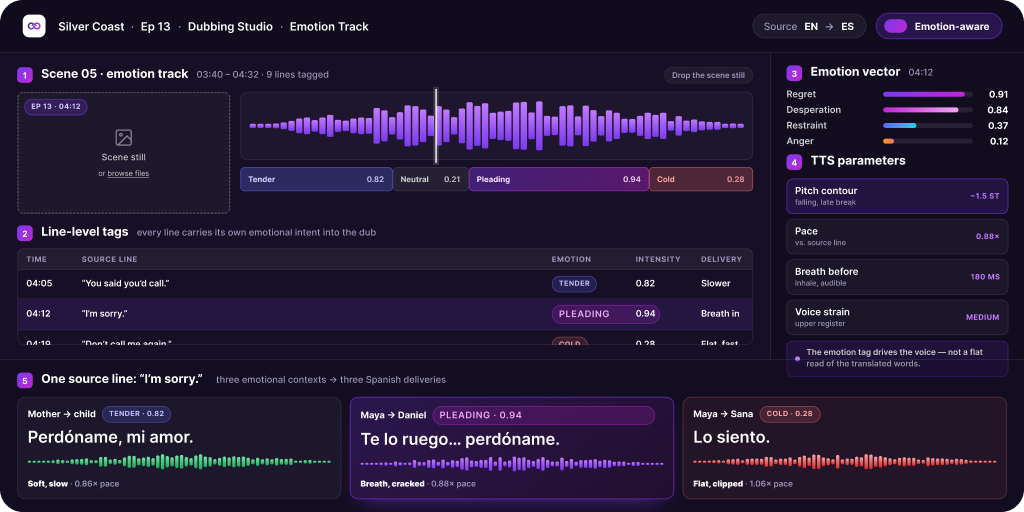
A sentence does not exist in isolation. Who is speaking, who they are speaking to, what happened before the scene, and how the line is delivered can all change the way it should be localized.
That is why context-aware localization is becoming a major part of multilingual voice AI. Modern systems are moving toward understanding relationships, emotional intent, cultural references, and scene-level meaning instead of treating every dialogue line as an independent translation task. Echo9 specifically describes its localization workflow around episode-level context, relationship, cultural adaptation, and emotion.
Consider a character speaking respectfully to a senior family member. A direct translation may communicate the words correctly, yet the target-language version could sound too casual or too formal if the relationship is ignored.
Anger, sarcasm, excitement, fear, or hesitation can also completely change how a line should sound. Echo9’s approach to context-aware localization connects these elements before the final voice is generated.
4. Multilingual Content Is Moving Toward Greater Scale
Producing one localized video is very different from managing an entire multilingual content library.
A streaming platform may need several languages for every episode in a season. A creator may want to expand a large video archive into new markets. An enterprise could have hundreds of training videos that need localization over time. In each case, repeating the same process manually can create delays and consistency problems.
AI is making larger localization operations more practical by automating parts of transcription, translation, voice generation, timing, and quality workflows. Deloitte’s research on Generative AI autolocalization highlights the potential for AI-powered localization to reduce scalability problems and support content across languages and regions.
The challenge now is managing that scale without losing control. Echo9 addresses this through a production environment built for episodic content, with centralized workflows for subtitles, dubbing, terminology, voice consistency, review, and delivery.
5. AI and Human Review Are Working Together
Automation can accelerate production, but localization still benefits from human judgment.
A generated voice may sound fluent while a translated joke misses its intended effect. Similarly, a technically accurate line may not match a character’s personality or the cultural expectations of the target audience. Quality therefore needs to be evaluated across more than pronunciation alone.
Echo9’s recent content describes AI plus human review as a practical approach for maintaining quality at scale. Its workflow combines automated processing with human review and QA rather than treating AI output as automatically final.
Human reviewers can focus their attention where it matters most: emotional delivery, cultural nuance, terminology, timing, and unusual dialogue. AI handles repetitive production work, while people provide the judgment needed for content that has to feel genuinely localized.
6. Quality and Responsible Voice Use Are Becoming Essential
Greater access to voice generation also brings greater responsibility.
Voice technology can reproduce recognizable vocal characteristics, which makes consent, permissions, and appropriate use important considerations when creating localized content. Quality control is equally important. A multilingual voice workflow should not stop when the audio file has been generated.
Teams need to check whether the voice sounds natural, whether terminology remains consistent, whether the emotion fits the scene, and whether the audio is properly aligned with the video.
Echo9’s AI dubbing quality framework separates quality into areas such as naturalness, translation and terminology accuracy, and lip sync/timing. This kind of structured review helps teams identify specific problems instead of relying on a general impression of whether a dub “sounds good.”
Free Trial
Run one episode through the full pipeline.
All eight stages on your own content — upload to broadcast-ready audio. No credit card, no managed-service queue.
The biggest change is not simply that AI can produce more languages. The production model itself is evolving.
Content teams can increasingly think about localization earlier in the content lifecycle instead of waiting until a video is finished and then starting a separate translation process. Language selection, voice identity, terminology, cultural adaptation, and quality review can become part of one connected workflow.
For creators, this can make international expansion more accessible. Streaming platforms can evaluate more markets without building a separate production pipeline for every language. Studios can manage larger episode libraries while maintaining consistency across a season. Brands and educators can also adapt existing content for audiences they could not efficiently reach before.
Echo9’s multilingual localization workflow reflects this shift by treating language expansion as an ongoing content operation rather than a series of disconnected translation tasks.
The Future of Multilingual Voice AI
The next stage of multilingual voice AI will likely focus less on simply speaking another language and more on delivering the right experience in that language.
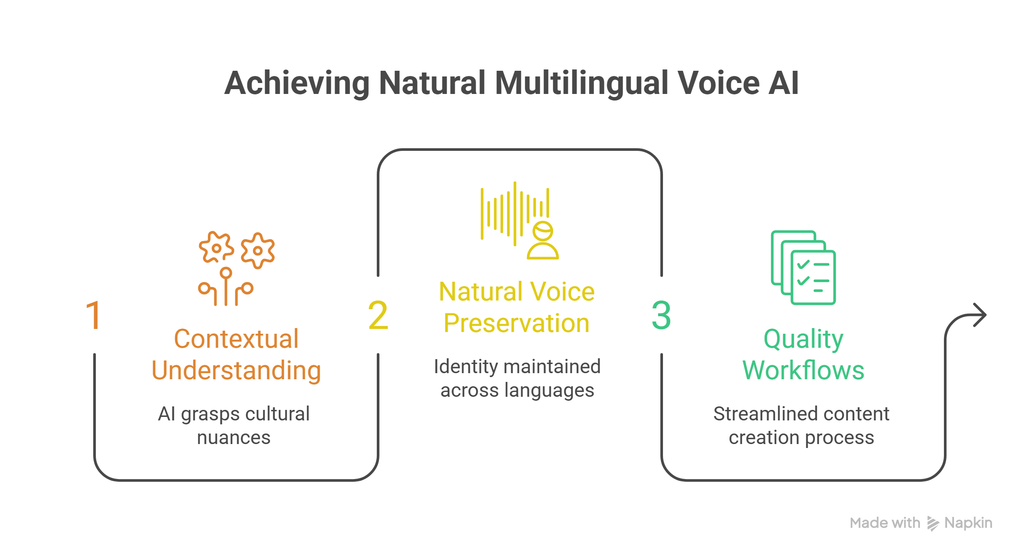
Natural voices will need to preserve identity without losing cultural relevance. Automated systems will need to understand more context before generating localized dialogue. Quality workflows will become increasingly important as the number of languages and content assets grows.
That direction is already visible in current AI dubbing platforms, where voice generation is being connected with translation, context analysis, timing, quality assurance, and series-level management.
For global content teams, the goal is therefore not just multilingual output. The real opportunity is to make localized content feel as intentional and natural as the original.
Conclusion
Multilingual voice AI is becoming a major part of how global content is created and distributed in 2026.
The important trends go beyond faster voice generation. Better multilingual speech, consistent voice identity, context-aware localization, scalable production, human review, and responsible voice use are all shaping the next generation of global content workflows.
As more creators, studios, platforms, and brands expand into international markets, the strongest localization workflows will be the ones that combine AI’s speed with the context, quality, and cultural understanding that audiences expect.
For teams looking to scale subtitles and dubbing across languages, Echo9 brings these capabilities together in a workflow designed for professional, episodic localization.
FAQs
What is multilingual voice AI?
Multilingual voice AI uses artificial intelligence to generate, translate, adapt, or localize spoken content across different languages. It can support technologies such as AI dubbing, text-to-speech, voice cloning, and speech translation.
How is multilingual voice AI changing content localization?
It allows content teams to create localized versions more efficiently while maintaining elements such as voice identity, timing, terminology, and emotional delivery. This makes it easier to adapt videos for multiple markets without rebuilding the entire production process for each language.
What are the main multilingual voice AI trends in 2026?
Key trends include more natural multilingual speech, greater use of voice cloning, context- and emotion-aware localization, scalable AI dubbing workflows, AI combined with human review, and stronger attention to voice quality and responsible use.
Is AI dubbing better than traditional dubbing?
Key trends include more natural multilingual speech, greater use of voice cloning, context- and emotion-aware localization, scalable AI dubbing workflows, AI combined with human review, and stronger attention to voice quality and responsible use.
Can AI preserve a speaker’s voice across different languages?
Voice cloning technology can reproduce characteristics of a speaker’s voice in another language. However, preserving the right voice identity also requires attention to pronunciation, emotion, context, and responsible use of the speaker’s voice.
Why is context important in multilingual voice AI?
Context helps AI understand how a line should sound and what it should mean within a scene. The relationship between characters, emotional intent, cultural references, and surrounding dialogue can all affect how localized speech should be produced.
How can content teams maintain quality across multiple languages?
A structured workflow can combine automated processing with human review. Teams can check translation accuracy, terminology, pronunciation, emotional delivery, timing, voice consistency, and overall naturalness before the localized content is published.
What types of content can use multilingual voice AI?
Multilingual voice AI can support many forms of spoken content, including streaming videos, online courses, marketing videos, social media content, corporate training, entertainment, and episodic video libraries.
Rephrase-Fit Engine
Test the Rephrase-Fit Engine on your toughest scene.
Send us the scene where lip-sync always breaks. We’ll show you it fixed, with no speed change.